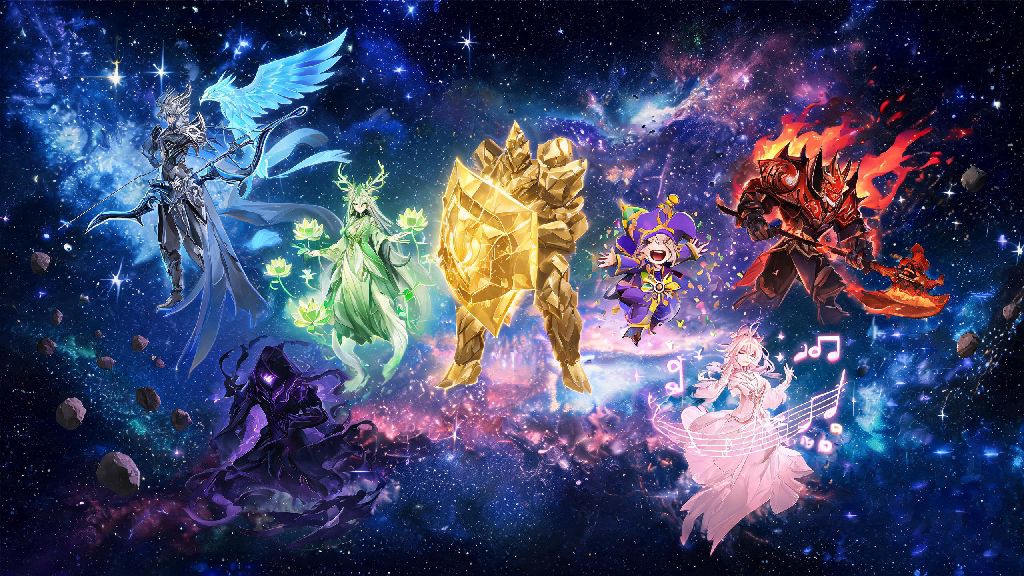
If you’ve spent even a few hours exploring Honkai Star Rail’s vast, interstellar world, you’ve almost certainly heard mentions of Aeons in cutscenes, character voice lines, and even path descriptions for your playable units. If you’re asking how many aeons are in honkai star rail, you’re not alone – many players want to know more about these godlike beings that shape every part of the game’s story and mechanics. I’ve spent over a year playing through every update, digging through hidden lore entries, and testing how path ties to Aeons affect team performance, so I’m breaking down everything you need to know in this guide. You won’t just get a number here – you’ll learn how each Aeon impacts your gameplay, which paths are tied to which beings, and why these figures matter more than you might think for your account progression.
How Many Aeons Are in Honkai Star Rail Right Now?
As of the latest game update, there are 18 confirmed Aeons in the Honkai Star Rail universe, ranging from active, widely worshipped beings to long-fallen figures whose legacy still lingers across the stars. Not all of these Aeons have made a direct appearance in the main story yet, but all are referenced in official lore, item descriptions, or hidden world entries scattered across the game’s playable worlds. You won’t encounter every Aeon directly during your first playthrough, but their influence is visible even in the starting worlds of Herta Space Station and Jarilo-VI, from the Trailblaze powers your main character wields to the shields Gepard uses to protect Belobog. Each Aeon is tied to a specific “Path” – a core philosophy they have dedicated their entire existence to, which powers all characters, light cones, and path resonances that align with that same ideology. Fallen Aeons still have active paths, so even if an Aeon is confirmed dead, characters that follow their path can still access their full power, and you can still use their path bonuses in content like the Simulated Universe.
Key Details About the Most Prominent Aeons You’ll Encounter
While there are 18 total confirmed Aeons, a handful stand out as the most relevant for new and returning players, as they tie directly to the main story and core gameplay systems. You’ll hear these names mentioned constantly as you progress through the Trailblaze mission, and you’ll use their powers every time you build a team or run endgame content. The most prominent Aeons you’ll interact with early on include:
You can unlock dedicated lore entries for each of these Aeons by finding hidden data discs, talking to specific NPCs, and completing hidden achievements across every world. I was surprised to find that even small side quests on Jarilo-VI have hidden references to Qlipoth that most players skip over, so it’s worth taking an extra minute to talk to every NPC you pass during your playthrough. Learning the backstory of each Aeon can make cutscenes far more impactful, as you’ll catch small references and foreshadowing you would have missed otherwise.
How Aeons Directly Impact Your Gameplay
A lot of new players make the mistake of writing off Aeons as nothing more than fun lore fluff with no real impact on gameplay, but that couldn’t be further from the truth. Aeons shape almost every part of how you build teams, pick light cones, and clear endgame content, even if you don’t notice it at first. Every playable character in Honkai Star Rail is aligned to a path that is tied directly to an Aeon, so their entire kit is designed around that Aeon’s core philosophy. For example, all Abundance characters (tied to Yaoshi) are focused on healing and supporting their team, while all Destruction characters (tied to Nanook) are built to deal high damage to groups of enemies. Light cones, the primary equipment item for all characters, also draw power from Aeons, so a light cone aligned to the Harmony path will give far better bonuses when used on a Harmony character than a character from a different path. The Simulated Universe, one of the game’s most popular endgame modes, even lets you borrow power directly from Aeons by picking Path Resonances, which are special, game-changing buffs that can let you clear even the hardest content with underleveled teams. I remember when I first tried Simulated Universe World 5, I kept failing over and over again until I switched to the Preservation path resonance, which gave me enough permanent shields to survive Kafka’s big one-shot attacks. When picking your team comp for endgame content, it’s always a good idea to align your path choices with the Aeon bonuses available for that specific challenge. Many limited-time events and endgame challenges like the Forgotten Hall have special modifiers that boost characters of specific paths, so knowing which Aeon ties to which path can help you pick the right units fast without wasting time testing random team comps.
Common Misconceptions About Honkai Star Rail Aeons
With so much scattered lore and hidden mechanics tied to Aeons, it’s no surprise that there are a lot of common misconceptions floating around the community that can trip up new players. The biggest myth I see all the time is that the number of Aeons is fixed forever. HoYoverse adds new Aeons every few major updates as they release new worlds and expand the overarching story, for example, the Penacony update added three new previously unmentioned Aeons tied to the planet’s unique lore. Another common myth is that fallen Aeons are useless. As we mentioned earlier, fallen Aeons’ paths remain active long after they are gone, so you can still use their power in the Simulated Universe and on your playable characters. Akivili is one of the first fallen Aeons you learn about, but they are the core of the entire game’s story, and all of the Trailblazer’s unique powers come directly from their legacy. A lot of players also assume that all Aeons are either strictly good or strictly evil, but that’s not how the Honkai Star Rail universe works. Each Aeon acts only to advance their own path’s philosophy, with no regard for standard human morality. For example, Yaoshi grants immortality to anyone who asks, which seems like a kind act on the surface, but it leads to horrific mutations and centuries of war for civilizations that accept their gift. Nanook wants to destroy the entire universe, but hidden lore hints that they have a tragic, understandable reason for their mission that hasn’t been fully revealed yet. Don’t write off any Aeon’s path as “bad” for gameplay – even paths that seem niche for new players, like Nihility or Erudition, have some of the strongest units in the game if built correctly. I used to think Nihility was a useless path for casual players until I built Pela and Silver Wolf, who let me clear Forgotten Hall floors 20 levels above my account’s recommended level.
At the end of the day, whether you’re here for the deep, interconnected lore or just want to build stronger teams to clear endgame content, knowing how many aeons are in honkai star rail is the first step to getting more out of your time in the game. You don’t have to memorize every single Aeon’s backstory right away, but taking a few minutes to learn the ones tied to your favorite characters’ paths will make both the story and gameplay feel far more rewarding. As HoYoverse releases more updates and new worlds, we’ll almost certainly see more Aeons added to the game, so keep an eye out for hidden lore entries as you explore every corner of each new planet. If you have a favorite Aeon or a fun lore detail you’ve found that I didn’t mention, feel free to drop it in the comments below.