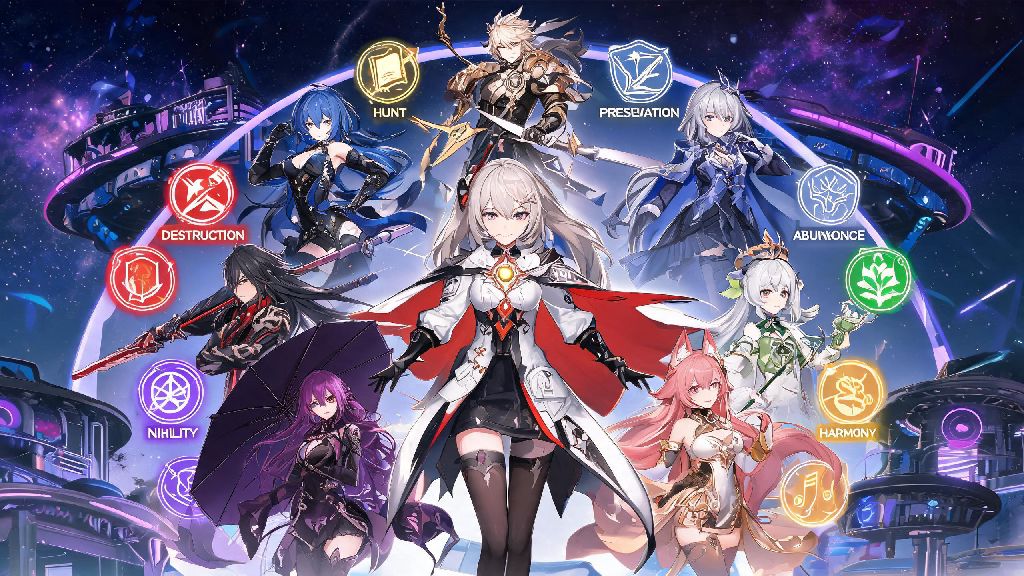
If you’re new to Honkai Star Rail and have found yourself scrolling through your character roster wondering why some units nuke bosses in one hit while others only heal or buff your team, you’ve probably asked how many paths are in Honkai Star Rail at least once. Paths are the core role system that defines every playable character’s function in your team, and understanding them is the first step to building effective comps that can clear even the hardest endgame content. A lot of new players get confused by conflicting counts online, so we’re breaking down every path type, their use cases, and common mistakes to avoid so you can stop guessing and start winning.
How Many Paths Are in Honkai Star Rail, Exactly?
If you’ve searched how many paths are in Honkai Star Rail before, you might have seen conflicting numbers online, and that’s because there are two separate groups of paths to account for. There are 7 core playable paths that all obtainable characters are assigned to, plus 7 additional exclusive paths that only appear in Simulated Universe runs, limited-time events, or as Aeon lore references, bringing the total count to 14 as of the latest game update. All playable characters are locked to one fixed path, you can’t change their role even if you swap their light cones, relics, or team positioning.
Most casual players only need to learn the 7 core playable paths to progress through the story and most endgame content, but we’ll cover the exclusive Simulated Universe paths later too if you’re a fan of that game mode. HoYoverse occasionally adds new paths with major version updates, usually for limited event content first before possibly adding them as playable roles later, so the total count might go up in future patches.
Core Playable Paths: Roles and Best Use Cases
When people ask how many paths are in Honkai Star Rail, they’re almost always referring to these core playable paths first, as these are the ones that shape your regular team comps outside of event content. Each path has a clear, defined role, and most meta teams will use a mix of 3 to 4 different paths to cover damage, support, and survivability needs. Here’s a full breakdown of each playable path:
You don’t need one of every path for every team, but most meta comps follow a rough structure: 1 main damage dealer (Hunt/Erudition/Destruction), 1 support (Harmony/Nihility), 1 survivability unit (Preservation/Abundance), and a flex slot that can be any path depending on the stage modifiers. You can run two damage dealers in one team if your survivability unit is strong enough, this is a common comp for fast clears in Simulated Universe and Calyx farming runs.
Exclusive Simulated Universe Paths: What They Do
The 7 extra paths you might see referenced online are only available as buff sets you pick during Simulated Universe runs, or as boss and enemy roles in limited events, and there are no playable characters for these paths as of now. Some of the most popular exclusive paths include Remembrance, which gives freeze and crowd control buffs, Elation, which gives massive bonuses for follow-up attack teams, and Propagation, which supercharges DoT team comps to melt even the tankiest bosses.
You can mix playable path characters with SU exclusive path buffs to create incredibly overpowered builds for specific runs, like running a DoT-focused Nihility team with Propagation path buffs for extra DoT damage and application speed. If you’re struggling to beat a higher Simulated Universe world, picking a path buff that synergizes with your strongest team’s core path will almost always make the run far easier. HoYoverse adds new exclusive paths fairly often with Simulated Universe updates, so you’ll have new combinations to test every few months.
Common Path Mistakes New Players Make (And How to Fix Them)
A big part of learning team building after you figure out how many paths are in Honkai Star Rail is avoiding common mistakes that cost you clears in endgame content. The most common mistake new players make is only investing in damage paths (Hunt, Erudition, Destruction) and ignoring support and survivability paths entirely. A level 60 Harmony buffer will make your level 80 Hunt character hit far harder than a second level 80 damage dealer would, so you should always level at least one good Harmony and one good survivability unit early on.
Another common mistake is trying to force the wrong path for a specific stage. For example, using a Hunt main damage dealer for a stage full of 5+ low-health mobs will make the run take 3x longer than using an Erudition character, even if the Hunt unit has higher overall stats. Always check the stage modifiers before picking your team's path composition, that will save you a lot of wasted retries and stamina. Some stages have modifiers that reduce shield strength, so you’ll want to bring an Abundance healer instead of a Preservation shielder, and vice versa for stages with one-shot boss attacks.
Don't sleep on Nihility characters either, even if they don’t deal big flashy direct damage. A well-built Nihility character that applies 30% defense reduction to a boss will make every other unit in your team deal 30% more damage for the whole fight, which adds up to far more total damage than adding another DPS would. For endgame content like Pure Fiction and Memory of Chaos, a good Nihility unit is almost as mandatory as a healer or shielder.
Now that you have a clear answer to how many paths are in Honkai Star Rail, you can start building more effective teams that fit your playstyle and the content you’re trying to beat. You don’t have to stick to the meta comps everyone posts online either, experimenting with weird path combinations is half the fun of the game, and you might stumble on a build that works even better for your specific character roster. If you’re still stuck on team building, try sorting your character list by path first to see what options you have, then build around your strongest damage dealer’s path to get the most synergy.