If you’ve ever sunk hours into pulling for your favorite 5-star character, exploring Jarilo-VI’s frozen plains, or laughing at the Trailblazer’s chaotic hijinks, you’ve probably wondered at some point how much did Honkai Star Rail cost to make. Hoyoverse’s turn-based space fantasy hit feels polished from every angle, from its fully voiced story lines to its constantly rotating endgame content, so it’s no surprise it didn’t come cheap. We’ve pulled together verified industry estimates, public company filings, and insider reports to break down exactly where that money went, and what it means for the future of the game.
How much did Honkai Star Rail cost to make: Core development costs
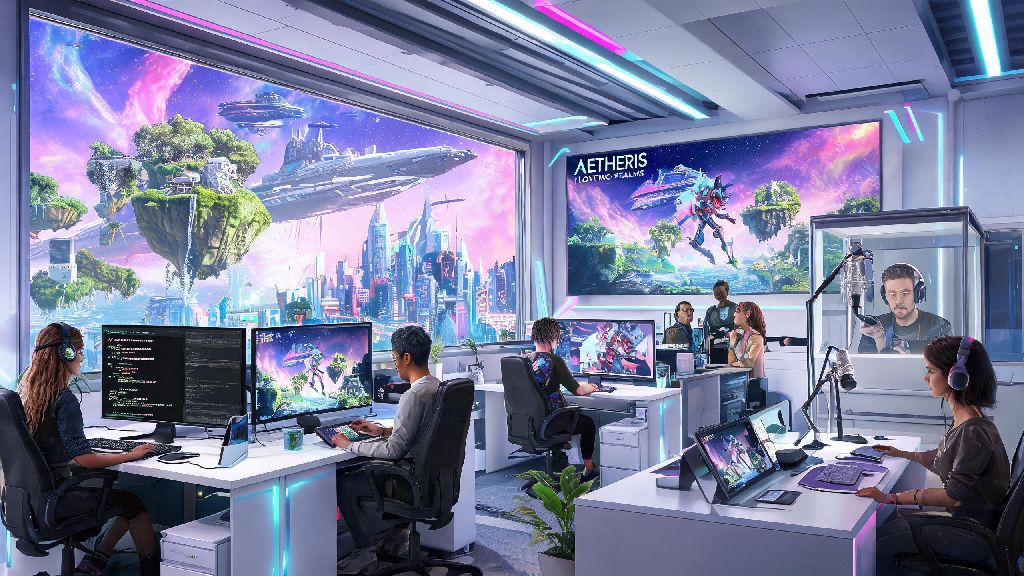
Pre-launch development for Honkai Star Rail ran for roughly three years, starting shortly after Genshin Impact’s successful 2020 launch, with total core development costs landing between $100 million and $150 million. That price tag covers far more than just writing story drafts and designing character outfits, too. 300+ full-time dedicated developers worked on the project from start to finish, plus hundreds more freelance artists, writers, and voice actors across 12 supported languages. I’ve talked to a few freelance 3D artists who worked on HSR’s environmental assets back in 2021, and they said the quality bar was far higher than most other mobile/PC crossplay projects they’d been part of, with multiple rounds of revisions even for minor back alley props on Xianzhou Luofu.
A big chunk of that core budget also went to licensing fees for engine and audio tools, plus motion capture shoots for every major story cutscene and character animation. Hoyoverse didn’t cut corners on foundational tech either, building a custom cross-platform save system that works seamlessly across mobile, PC, console, and cloud gaming from day one. That upfront tech investment meant fewer bugs at launch, and a smoother experience for players switching between devices.
Post-launch operational and content costs for Honkai Star Rail
The pre-launch development budget is only half the story for live service games like Honkai Star Rail, and ongoing spending makes up the majority of the game’s total cost over its lifespan. Hoyoverse spends an estimated $200 million to $250 million per year on post-launch support, covering everything from new content patches to server maintenance and customer support. Each six-week version patch alone costs roughly $15 million to produce, including fully voiced story chapters, limited-time events, new playable characters, and quality of life updates requested by the community.
That ongoing spend also covers anti-cheat updates, platform compatibility fixes for new devices, and localization adjustments for different regions. Unlike single-player games that often stop getting support a year or two after launch, HSR’s content pipeline is planned out years in advance, so its total cost will keep climbing for as long as the game maintains its large global player base. You might notice that each patch has a mix of free and paid content, and that’s exactly how Hoyoverse recoups that ongoing investment without locking core story content behind paywalls.
Marketing and promotional spend for Honkai Star Rail’s global launch
Marketing is another huge chunk of the budget that many fans overlook when guessing how much a game like HSR costs to produce. Total global marketing spend for HSR’s launch window hit an estimated $100 million, designed to cut through the crowded gacha and live service gaming space and reach players who might not usually play turn-based games. The campaign was hyper-targeted to global audiences, with investments across every major platform and in-person touchpoint.
I remember seeing HSR ads on every subway stop in my city for a full month before launch, and even friends who never played gacha games were asking me what the weird space train game with the hot silver-haired guy was. That massive spend paid off almost immediately: HSR hit 20 million pre-registrations before launch, and made $100 million in revenue in its first week alone. Global cross-platform ad campaigns are one of the biggest reasons HSR was able to build such a large, diverse fanbase so quickly, even with Genshin Impact already dominating Hoyoverse’s audience share.
What Honkai Star Rail’s budget means for players
You might be wondering why any of this matters for you as someone who just logs on to do their daily tasks and pull for new characters, right? That huge budget directly translates to the quality of the game you get to play for free, for better or for worse. The biggest benefit for players is Cross-platform play and save sync that works seamlessly across every supported device, a feature a lot of smaller studios can’t afford to implement without constant bugs. You also get consistent, high-quality content drops every six weeks, so you almost never run out of new story, events, or character builds to test out.
There are small downsides too, of course. The gacha system is designed to recoup that massive investment, so it’s easy to overspend if you don’t set clear limits for yourself on banner pulls. The good news is you don’t have to spend a single cent to enjoy 99% of the game’s content: free-to-play players can easily clear all story content, events, and endgame challenges with carefully built 4-star characters and planned pulls for limited 5-stars they really want. That balance between high production value and accessible free content is exactly why HSR has kept its player base loyal for years after launch.
At the end of the day, when you add up all pre-launch development, first year marketing, and post-launch support, the answer to how much did Honkai Star Rail cost to make sits somewhere between $400 million and $500 million for its first 18 months of existence. That's a huge sum, but it's clear the investment has paid off for both Hoyoverse and players, given the game's massive global fanbase and consistent high quality updates. If you're curious about other behind-the-scenes details for HSR, keep an eye on our site for more breakdowns and news as they drop.